Showing posts with label Cameron. Show all posts

Wednesday, October 17, 2007

Winning Ugly

Punch and Judy
A win but no knockdown
A win's a win, and most seem to have chalked today's PMQs up as a win on points to Cameron, but it wasn't an especially good showing.

He gave his opponent too much latitude to manoeuvre back onto safer territory on the hospital questions.

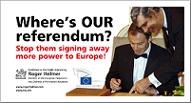
He needed the EU referendum attack, one that is to all intents and purposes indefensible by Brown, to consolidate a comfortable but unspectacular win. As strong as the EU line is by Cameron, he can't use it every week.

If it wasn't for basic incompetence by Brown, he might actually have managed to have given his troops something to cheer or jeer about spontaneously, but in the space of a few minutes he managed to:
  • Exhibit basic dishonesty by referring to Cameron as an economic advisor to the Norman Lamont, in order to try and score some additional 'Black Wednesday' points, whereas every biography going into details describes his role as being a political adviser.

  • Show that he has not the slightest self-knowledge of his weaknesses by completely stuffing up two simple jokes

  • Ironically make a hash of his pre-prepared soundbite about Cameron's supposed love of pre-prepared soundbites.

  • Succumb, after Miliband's schoolboy whining yesterday, to wishful thinking by referring to William Hague as Foreign Secretary.

  • Demonstrate an inability to think under pressure, by continually making jibes at the Liberal party, unrepresented in the current parliament, rather than his intended target, the Lib Dems.
Overall though, Cameron is on the right lines. One person who does have some work to do on the Conservative benches is George Osborne. In the attacks Brown made on the Conservatives, only one was not based on a dubious regurgitation of ancient history, that of the alleged £6 billion 'black hole' in funding Tory plans. How he used it - it seems to be the only punch the great clucking fist has to throw at the moment.

If Osborne's team can either restore faith in his original funding proposal, or find some other revenue source that would receive popular support, they will have dealt the Prime Minister another body blow, and leave him almost completely out ammunition.

On a more consensual point Brown offered very sincere sounding congratulations to the England Rugby team, and best wishes for the final. I will try and put aside my scepticism about to what extent our Scottish Prime Minister will truly be rooting for Vickery and the team at the weekend, even in view of this fine article from the Times on NuLab's inverted snobbery about any sport other than chavball.
In a recent article on the Foreign Secretary, David Miliband, The Observer's political editor Nicholas Watt, made great play of unearthing the fact that as an 11-year-old Miliband was a terrible goalkeeper who once let in seven goals in a schoolboy match.

He goes on: “Cabinet colleagues have rallied to Miliband's defence. Aware there is no place in the New Labour tribe for non-footballers.” So there it’s official, you can’t help run the country unless you’re into football.

...

Maybe one day we’ll have politicians with the courage to openly admit their preference for rugby over football – just don’t hold your breath!

Source: The Times

I can't remember which blogger made the comment about New Zealand Prime Minister, Helen Clark's joyless, miserable face when attending the France v All Blacks quarter-final, even before her country's team began its familiar choking routine (no, not the haka).

To whoever it was, I am the bearer of bad tidings. It has been confirmed that Brown's miserable mug will be putting in an appearance at the final.

Wednesday, October 10, 2007

Traditional Entertainments


Back to basics
So it's back to school, and back to the same old games. There have been a couple good live blogs today covering the return of PMQs. It says something for the renewed interest in matters political in the aftermath of the non existent general election that the sound was turned up in the pub in the Surrey hills where I was grabbing some lunch, to hear the dour one receive, what seemed by common consent, his well deserved kicking.

Most media reaction seems to have been that Cameron scored some points, but the invitation by Bob Neill for Brown to visit a bottle bank in his constituency seems to be the most widely quoted jibe. There were the inevitable sufferers of leftism who seem to have been watching a different contest, especially among those commenting over at Political Betting, but in reality Brown would know he had lost this round before he rose to the dispatch box. To be fair, Brown had managed to improve his PMQs outings after his poor debut, but right at the moment he looks as if he is back to square one.

It was a pretty effective line by Cameron, though as Shane Greer's live blog points out, there were possibly a couple of easy punches that were spurned.

Despite enjoying the performance, and being personally happy to see Brown getting beaten up like this on a weekly basis, I do think it's maybe time to move on now for Cameron and rise above this line. The areas of the media that are normally somewhat hostile, but gave Cameron a fair hearing over the conference season, did so, as far as I can see, largely because of the power of the way arguments were put over, not least by Cameron himself, and because a positive agenda was being put forward.

PMQs is obviously not the best forum for advancing opposition policies, and it is there mainly as an opportunity to bring the spotlight on the failings of government policy and its actions. That said, it can be done in a way that seems considered and statesmanlike, and too many knockabout sessions like this may distract the media's attention for more positive Conservative developments.

In the end, the 'bottling' lines will start to wear thin, as even the best of jokes do through over telling. They are still a nice jab to be landed now and again, but any collection of half-articulate back benchers high enough up the PMQs batting order would be more capable of keeping this particular wound open.

To continually look for fresh lines of attack, or even wrong-footing lines of support must be the way forward for Cameron.

The Prime Minister is, without doubt, a very intelligent man, but that is not the same as being a quick thinker on his feet, as his first PMQs outing showed. Give him enough time on one topic and he will find a way to spin himself out of trouble, even on occasion within a single session. I prefer the approach where the leader of opposition's questions are split across two or more distinct subjects, tackled with a varying delivery from outright hostility, to constructive criticism, as it denies the Prime Minister the chance to build up a head of steam and move the debate on to ground that is more fertile for spin.

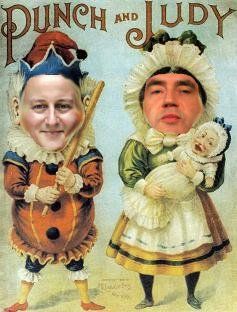
Still, it was entertaining to see a return of Punch and Judy politics, even if I hope it is only temporary, and as someone generally, even increasingly sympathetic to the Cameron cause, it was good to see who clearly held the big stick.

Sunday, October 07, 2007

Rational Environmentalism

Environmentalism
How to vote blue to go green?
As someone who is often critical of BBC national radio news and current affairs output, it is a rare pleasure to recommend something to listen to, still available on the 'Listen Again' service.

It has been a busy weekend, both politically and on the Rugby front, but I did pause in my preparations for England's game yesterday when I heard something on the radio that actually made sense, and made a note to listen to the programme in full today.

Yesterday's 'Talking Politics' on Radio 4 was the last of the current season as normal Westminster service resumes, and tackled the thorny questions around climate change, but not from the normal dogmatic BBC position. It does appear that on this subject at least, some semblance of impartiality has returned.

The 'Listen Again' archive for the show is here and it can also be downloaded as an MP3 podcast here.

The programme features an interview with “Sceptical Environmentalist” Bjorn Lomborg, in which he makes his case in a concise, powerful and highly convincing manner. For those who don't know Lomborg's line on how even if you accept man made climate change as fact, that currently approaches to dealing with it are backwards looking and come at an unacceptable human cost, I would suggest you take a listen. For those already au fait with the Lomborg manifesto there are a couple of nice digs at Al Gore to enjoy.

Focus group guru, Frank Luntz, has some fascinating insights in to green issues from a Conservative perspective. He looks at how David Cameron can take the popularity boost that his espousment of green politics has given himself and the party, and look to move from this to truly effective policy without relying on the current 'tax and punish' thinking that dominates the mindset of environmentalists of different political hues.

Finally the panel discussion features Fraser Nelson of The Spectator, Peter Hitchens, who, I'm sure purely by accident, makes the occasional constructive contribution, and they even manage to find a Green party spokesperson, Jenny Jones, who seems to be some distance from the flat-earth, anti-human wing of her party.

I'm not all that interested in green politics most of the time. As I've posted before, I have a deep distrust of some of the green lobby's policy of non-debate on the science of climate change. Another source of scepticism comes from my memories of being told in high school that we had to conserve fossil fuels as they would run out in the first decade of the 20th century. Except of course, they haven't, and we have found massive new reserves and technologies to exploit them. I can't help feeling that the emergence of a new problem, requiring exactly the same solutions once the old argument lost its potency was just a little too convenient.

I buy more into the arguments about security of energy supply, but I guess this is a harder line to push. If you ask the man in the street if he's worried that his gas bill is kept down only by buying from a sometimes hostile Russia, he'll shrug his shoulders and say 'so what?'; ditto petrol from the Middle East. A nice little story line about the end of life on Earth as we know it is a much easier message to infiltrate into the public's consciousness.

Like some of the comment in the programme, I did like the subtle shift of Tory green policy, putting it under the general 'security' banner.

For all my general scepticism, I did enjoy this show. Many of the points put forward would apply equally to tackling security of energy supply, and the moral case that we should tackle other global problems of higher priority first was very powerful.

For once, well done the BBC.

Thursday, October 04, 2007

Posties Deliver for Gordon?

Pillar Box
Posties to the rescue?
It seems a lot less lonely at the moment being in the 'no autumn election' camp. Guido has a list of those who know a damn sight more than I do who are swinging behind the viewpoint that Gordon's small 'c' conservative instincts must be militating towards a later poll date, short of miraculous polling data in his favour.

There has been much talk about how his only real risk in this strategy is in looking either weak and indecisive, or like someone cynically playing with the media. There is some truth to this, especially as David Cameron is doing a pretty good job of boxing him into this corner. That said, the general consensus, which I'm inclined to agree with is that any damage to Brown over not calling the election would be pretty short lived, especially as he has studiously avoided making any significant comments on the timing of the election.

I actually think that he might even be able to do a little better than that, thanks to his brethren in union movement. With the postmen looking to disrupt postal services for weeks it would be very easy to present not holding an election as the responsible decision, especially in view of the well reported problems over electoral registration. I'm pretty sure that he'd almost certainly try the line that it would be 'irresponsible' to call for an election to be held in the current circumstances, though I don't think it's a jab that would carry all that much weight given the number of people on his own benches who have been making the same call.

It would be fascinating to hear some of the strategy discussions in Conservative high command at the moment. I find it hard to believe that they really do want to go to the polls just yet, but still the opportunity to keep up the pressure on Brown must be irresistible. There are clearly risks but reports such as that from the Guardian website today that Cameron is demanding the customary pre-election access to senior civil servants seem a pretty good way of keeping the Conservatives in the media spotlight in a way that makes them look to be very much on the front foot, which after all is half the battle.

According to the report:
"Given that you have allowed members of the cabinet to speculate openly that an election is to be called imminently, I am asking you today to give the necessary instructions for such meetings to begin immediately," wrote Mr Cameron.

"I would like this to start tomorrow, before the actual campaign begins, which would be consistent with past precedent."

In his letter, Mr Cameron disclosed that then prime minister Tony Blair wrote to the Tory leader in April last year authorising such talks to go ahead from January 1 2009, ahead of a possible election that year.

Source: Guardian Unlimited

While it appears that granting such access would still leave the Prime Minister a fair amount of leeway in when to call an election I've always felt that at hear he'd have wanted to go in the spring of 2009, with a good period at the helm under his belt and still a whole year of wiggle room if there were clouds on the horizon. I've wonder if this could precipitate an explicit public announcement on the matter if is decision is not to go to the polls now, as clearly he wouldn't want to afford Cameron's team that length of access.

In summary then, still with an extreme fear of egg on face, I'm sticking to the no autumn election line. I'd even be prepared to back the idea of a positive statement on the matter sometime early next week, putting the decision down to postal disputes and registration issues, rather than simply it fading off the agenda. I've no special sources of information; it's just the route that seems most consistent with the Brown I know and loathe.

Once again, I'm off to check the news feeds before posting!

Wednesday, October 03, 2007

End of Season Review

Empty Podium
All over, including the shouting...for now
I've been working at home quite a lot recently so I've had the dubious pleasure of being able to catch a lot of the conference season. It's not that that I'm that much of a political anorak, but when the other option was the "make me rich from crap in the attic with cooking stars in their own eyes" stuff that passes as 'quality' daytime broadcasting on the main channels, there really was no contest.

Probably the last time I caught anything other than news highlights of the conferences was when I was a student, so I have to be honest and say the style of all of the major party conferences was quite a surprise, albeit, in general a pleasant one, when my abiding memory was still one of cliff-face platforms with the seating positions of dour-faced front-benchers in their massed ranks at the cliff top being the main subject of debate amongst the commentators.

I'm not really going to be able to avoid a personal bias entirely, but for me these were the highlights and lowlights, the hero's and villains of the few weeks:

Best Moment (Liberal Democrat)
The succession of speakers from the floor, setting out principled arguments against the surveillance society and the ridiculous 'nothing to hide, nothing to fear' arguments from those who would give away their entire liberty and they grandparents too for a little illusory safety.

Best Moment (Labour)
Dennis Skinner chuntering away to himself during Quentin Davies speech inviting other Conservatives to abandon their principles for a little personal gain and join him in the Supreme Leader's big tent of all the talentless. I must learn to lip read before next year.

A nicer one? There is something about Harriet Harman's delivery that I can't help liking even though much of what she says drives me up the wall.

Best Moment (Conservative)
This is a tough call for me with so many good front bench performances. For me Liam Fox just about edged his boss, Duncan-Smith, Hague and Letwin. I still think he would have been a pretty disastrous leader for the party, but the passion on a subject that he clearly cares so much shone through and I actually found myself warming to him for the first time.

Leaders Keynote Speeches

Cameron - 8/10
Very solid and impressive delivery. I'm not sure about winding up on the National Citizen Service, as I still can't quite envisage sixteen year olds buying into the concept. Perhaps I was hoping for a bit more of a barnstorming performance towards the end, but the personal note played pretty well.

Campbell - 7/10
As I explained in another post I still think Ming could have done better, but solid nonetheless.

Brown - 4*/10
Average and not especially inspiring even before it emerged that the good bits were the work of somebody else.

* Brown deducted two points for plagiarism

Slickest Presentation
I have to go for the Liberal Democrats for this one. The other parties made impressive efforts but they pulled off a couple of cock-ups to blot their copybook. Labour needed someone better qualified to operate a 'kill' switch for the microphone at times and the amount of procedural nonsense that seemed only to be able to be dealt with from the chair was excessive. The Conservatives had widely reported sound problems of the opposite variety to kick off proceedings and didn't always segue always that well between a series of start acts.

Best Non-Party Contribution
This is probably the least fair call of all as timing-wise I missed, I understand, the best efforts at the Lib Dems' and Labour conferences. I was though impressed (and ashamed not to be able to remember his name) by the bloke at the Conservative's conference who ran some kind of mentoring project in Liverpool. His delivery might have woken a few elderly delegates from their slumbers, but it was full of passion, personal commitment and common sense, and it says much for what Cameron has done that his Conservative party can engage with people like this.

Feel Good Moment
I might have enjoyed Liam Fox's speech more but the enthusiastic reception acclaim for Iain Duncan-Smith's performance represented a well deserved rehabilitation of a decent man in the eyes of a once harshly judgmental party. In some ways his contribution may actually have been of greater value at a party level as he was preaching to the not uniformly converted.

Best Blog Coverage
No individual awards here, but I'll go for some the main Labour Bloggers overall, though I will also admit that it may be because of some of those less comfortable with the party line.

The Lib Dem contributions were well written, but just a bit too loyal and predictable for my taste.

The Conservative bloggers, Guido apart, were entertaining, but perhaps a bit too much tittle-tattle focused at times. This isn't much of a criticism as I know I'd be exactly the same if I ever went to an event like that. Iain Dale did much better from the platform, with quite a moving speech on Rwanda, even if it will be better remembered for his introduction as a 'foremost political blagger'.

Winners and Losers
Probably for me it has to be Ming, as the consequences of a bad performance could have been very swift and very serious. I actually think David Cameron had a better speech and his party a better conference, but I was never convinced that the immediate threat to him was as bad as some of the press made it out to be, and the chance of a sub-par performance causing fallout was much lower.

Gordon Brown for all his opinion poll lead has to be the loser of the conference season looked at in microcosm, especially after he compounded his problems over his speech with a political stunt that seems to have left a bad taste in the mouths of friend and foe alike.

I'm sure Brown wants to beat Blair in every respect, but I think he would rather that the fact that this includes outdoing him in spin and dishonesty is something he would prefer was kept a little more quiet.

Tuesday, October 02, 2007

Raising the Ante

Poker Chips
Gordon set to fold?
It's going to be a fascinating week or two for those few who actually still care about the political landscape of the country. Will he or won't he? A poll in what is starting to look like a pretty stagnant Autumn, or wait till the thin sun of spring?

Here's a post that I will check my news feed before clicking 'Publish' but I am going to nail my colours to the mast and say no 2007 General Election. I know this will probably explode in my face in spectacular fashion in short order and that most others with better knowledge than I disagree, but I just can't see it happening. Iain Dale and others have pretty strong evidence from their ever fruitful grapevines to the contrary. For all of this I'm going to join with the minority, such as Guido and A Very British Dude in his latest 18DS outing. Like Guido, for all the frenetic activity from the Labour party, I can't help but sense the faintest and most inexplicable smell of a bluff.

In addition to this, the innate caution of Brown, and certain practical objections I've touched on earlier, last night I felt I spotted another potential fly in the ointment for Gordon.

Out of boredom I ended up reading a copy of the Sun down at the local. I normally don't go near the red tops, call it snobbish if you like but they truly are unmitigated crap, and the mid market tabloids are not a huge deal better. I quite enjoy all of the qualities, even those that sometimes make my blood boil; perhaps they don't quite have 'worthiness' of, say, their US cousins but they still feature quality journalism intelligent comment, even on rare occasion in the Independent, and leaven the mix with a moderate amount of entertainment.

For all that, you can't ignore the influence publications like the Sun, for better or worse, do have. The initial headlines did not look good for Cameron, as they ran with a 'Mission Impossible' theme for him with his '3 days to save the Conservative party'. Reading the whole coverage though left the distinct impression that the editorial line was that it was a mission the paper hoped he would succeed in.

Gone were the parroting of claims Cameron's supposed lack of substance, replaced with a focus on issues around which he could unite both party and, I presume, the Sun readership. Gone too was the half-hearted thin praise for the Prime Minister; true, it has rarely gone beyond a general sense of him being 'better the devil we know', but it was replaced with what often amounted to all out criticism.

It was still a long way from a Cameron endorsement, but combined with their campaign for a referendum on the EU Reform Treaty the Sun does seem to me manoeuvring into a position where it would be very hard for them to cheer on Brown in a snap election.

Were the mid-market tabloids to suddenly swing back to their traditional political bearings life could become very interesting for Brown, and perhaps the idea that he might risk loosing an ace from his hand might make the gamble too big for him to contemplate.

Monday, September 24, 2007

Unspeakable Addresses the Unmentionable

Quentin Davis
Yeuch, sorry...Quentin Davis
I'd hoped never again to mention the name of that slug in human form, Quentin Davis. Unfortunately he has just delivered a truly nauseating speech to his new found brothers and sisters at the Labour party conference.

Referring to himself as a 'prodigal son', he launched into a typically vacuous attack on the supposed lack of substance of David Cameron. Perhaps the most ridiculous claim of all was that Cameron flip-flopped on issues of tolerance. Cameron has been pretty consistent on these issues as far as I can see, and while it is true that Mr Davis has held and, in the absence of evidence to the contrary, continues to hold some very firm positions on matters of some aspects of tolerance, these positions have often been very contrary to those of his new-found family.

Davis should tread carefully. As the relatively subdued applause for his own effort and for what was actually a very good speech on Northern Ireland affairs by fellow turncoat, Shaun Woodward, the Labour party at large has a long and often vindictive collective memory. Simply showing an willingness to act the shaved performing monkey for the dour organ master won't buy Quentin all that much grass-root goodwill.

Dizzy also noticed my other candidate for most ridiculous contribution to the debate where Wendy Alexander, the Scottish Labour leader suggested that Conservative Party is driven by the "politics of envy". It's a charge which after Ming's contribution last week, is one where the Conservatives are the only major party with no case to answer.

Dizzy also makes a good point on Harriet Harmans's inability to count, but maths has never really been Harperson's strong point.

Overall though, Woodward's piece apart, it's been pretty dull fare. How I long for the days of Derek Hatton and his ilk.

Update 5:00pm: The Telegraph describes the reaction to Davis's speech as a standing ovation, and yes, technically they are right, but looking at some of the faces it seemed to be as heartfelt as much of the Conservative standing ovation for Blair's final Commons' performance.

I seem to be seeing party conference season events differently from most. I suspect that this is something to do with my increasingly cynical view of mainstream politics. Frankly the whole of it is becoming a pile of insubstantial, stage managed drivel. To an extent, it has always been the case, but the triumph of form ovr function is now almost complete and this is not a good thing.

For once, I actually felt some sympathy with the Beast of Bolsover as he listened to Quentin drivel on.

Friday, September 14, 2007

One Part of the Jigsaw

Portman Group ProveIt Card
A legitimate form of ID card?
Continuing the topic of my posts a few weeks ago, looking at the appalling catalogue of violent incidents of recent weeks, I felt that having criticised what I believe the government's approach might ultimately be, that it was only fair to look at some of the things that I think might actually have some effect on the problems we face. It's a tricky subject and I've yet to see a convincing solution put on the table, while some reports are casting doubt on the effectiveness of existing approachs such as ASBOs.

One of the themes of the sequence of violent incidents listed in the highlighted post was that among the catalogue perpetrators and victims there was a disproportionate number of the young. This is obviously saddening, and the list is not one of statistically significant length, but it tallies all too well with many people's real world experiences. This is not to demonise the young, the vast majority of whom are no more of a problem to society than I was at that age; occasionally a nuisance, but never really a problem. There is however clearly a subset who cause a disproportionate amount of problems to society.

Let's make one thing clear. This subset always existed, but where they would once hang around smoking they now linger round bus stops off their face on cheap alcohol, where they once might have indulged in petty shoplifting they now make more money from drugs, where they once might have been fought each other with fists they now carry knives or worse and don't really care who they use them on. Most of all, in the majority of cases, while once they knew there was a line which they knew once crossed would bring with it the intervention of adult authority; now they know their rights, the weakness of the criminal justice system and the number of their solicitor.

The damage this limited group cause to their own peers is not confined to the direct wrongs they may inflict, but also extends to an increasingly intolerant society to all young people. As I posted a few weeks ago, one of the most important ways you can get teenagers to engage in society is by giving them the right blend of rights and responsibilities in the management of their own lives as soon as they are capable of exercising them within the broad bounds that the reasonable adult world which they are about to enter has the right to expect them to. When you see some of the activities of the feral minority it makes it hard to believe in this principle, but believe in it I still do.

At the end of the day I still believe that the vast majority of people respond best to the challenges that life throws at them when given the greatest possible liberty to make their own choices. When forced or compelled even the most reasonable people can become resentful, especially if the heavy handed intervention of the state is down to a minority. It is impossible though not to consider what should be done about those that exercise those freedoms in a way that goes far beyond the limits of even the most reasonable and tolerant societies, and whose end result is the emergence of wholly unacceptable subcultures within which are found the roots of the evils of the last few days.

I should also say that, while considering myself a libertarian first and foremost, I am not part of that stream of thought that exactly the set same of fundamental liberties that should be offered to adults should also be offered, unrestricted, to children. Without the ability to fully comprehend the consequences of a decision, it is not reasonable to allow a child to have carte blanche to make some decisions. In the ideal world a responsible parent or guardian will act as a proxy in these situations, but we must accept the reality that in a minority of cases no such responsible person exists and we must reluctantly accept the role of agents of the state to fill the role.

I believe that it is in a understanding of basic principals such as these may lie one small part of the solution, and in particular the significance of that point where society hands over fully the rights and responsibilities over someone's life to the individual themselves.

Today, other than in the obvious cases of the age of consent and a few other examples, that point is almost universally at the point an individual reaches eighteen years of age. But when you really think about it, does that make any real sense whatsoever? We were all eighteen once, and to say that everyone was pretty much on some magic plateau with the same level of maturity is absolute bollocks.

Most of the rights offered are keenly sought, especially driving and access to the increasingly limited number of pubs and clubs without an over twenty-one policy; I suspect that sadly the right to vote is felt to be less important but still has symbolic importance. The ability to do any of these things responsibly at the age of eighteen will inevitably be highly variable.

Over recent weeks David Cameron's team have been making some encouraging noises that show they understand this issue. I'm not entirely sure that the idea of suspending driving licenses in of itself would be enough, but I think a wider concept of being able to suspend the privileges of adulthood for a certain time could be effective.

The problem is with the driving license idea is that it would be too hard to police effectively, especially considering the current attitude where the police prefer to focus on those motoring offences that can be policed with a camera and a database.
Portman Group ProveIt Card
Sorry, you're just not ready
Suppose though that other rights that are typically awarded at eighteen could be suspended for a period, say as far as 21?

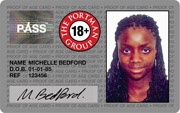
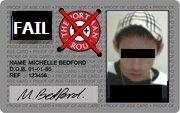
I hate the concept of ID cards with a passion, but for reasons of practicality and with extremely limited purposes, various forms of ID card do exist for young people to prove their age. Imagine that for anyone between 16 and 21 that a single properly managed card could be endorsed by order of the court, indicating that the person in question may be 18 but as evidenced by their behaviour they are not yet to be treated as being capable of exercising their adult rights and freedoms.

Such an endorsement could perhaps be extended as far as the age of 21.

Couple this with a crackdown on pubs, bars and clubs to force them to check this ID card and refuse service to those so endorsed. The same could go for applying for a driving license, voting, buying cigarettes and alcohol down the local off-license and so forth, possibly also to the right to chose you own educational choices at 16.

In there could be a genuine deterrent. Who wants to be among the few people that can't go clubbing because they had shown that they still just behaved like a child and therefore were being still treated like one? Perhaps we may even begin to turn around the direction that peer pressure currently presses.

The endorsement would not be like an ASBO, because there is no pride in not being able to do the kind of things your more mature and sensible friends can quite legally do. It would also be a very genuine punishment, and keep them away from the kind of situations where in their immaturity they could seriously impinge on the rights of others, without the negatives of custodial sentences, or the derision with which many other community punishments attract.

The underlying principle is that the age of adulthood becomes a movable feast.

Those who cannot yet understand the boundaries of how an adult should behave shall not receive the liberties of adulthood at the same time as those who can.

It's pretty draconian in a way, but there is a very real problem. What I'd really like to do is leaven it with some real additional freedoms for those who have not proved themselves incapable of handling them. I can't think of something completely appropriate as yet, but I'm working on it as the majority of well behaved young people, I am sure, could handle some greater freedoms, and they are not just as much, but more affected by the misdeeds of a tiny minority.

As a society we need to distinguish between the two, and offer the maximum freedoms to to those who can handle it, as much as we must emphasise the unacceptability of the behaviour of those who cannot.


Friday, September 07, 2007

Into the Confessional

Consulting
The art of the possible
I've done a hundred or more surveys where I am forced to try and categorise what I do for a living, and nobody seems to have the right radio-buttoned answer. It's hardly surprising because it takes me about five minutes to explain it face to face with someone I haven't met before. I guess the closest bite-sized answer would be the somewhat discredited term 'Management Consultant' rather than something more focused on the world of IT where most of the day to day grind comes from.

In my defence I would say that although most of what I do ultimately has a result involving more computer systems, I've used what influence I have to nip ill advised and ultimately unprofitable 'good ideas' in the bud at least as often as I have promoted the use of the latest 'sexy' technology to my own business' gain. Other than in the shortest of terms it has been the right approach to take.

I was struck today by the similarity of the position of senior politicians, especially those in opposition, with the announcement of David Cameron's ideas for voluntary 'Citizen Service' for 16 year olds.

It seemed to contain all the right buzz words, and touched on an area where there is almost universal acknowledgment of the need for action. For all that, I was surprised by the level of support from some of my favourite areas of the blogosphere, most noticeably Iain Dale who termed it a policy 'Everyone can Unite Behind'.

To an extent I believe Iain, one of the most rational and erudite commentators you could ever wish to listen to is right. It is certainly a message that will appeal to the broadest possible church that the Conservative party can ever hope to appeal to. It is also possible that the appeal may go even further, given that the best of stinging attack from the government was:
Cabinet Office Minister Ed Miliband said the Tory proposals were "neither costed nor funded".

Source: BBC News

Neither "costed nor funded". Mmm, there's a formula we've seen before that basically means "that will be in our manifesto too and we'll just quibble over the balance sheet, and may drop that 'voluntary' bit too."

The problem is though, and I hate to use a buzzword myself, is that one of the most valuable skills of a good consultant is to really understand how the proposal sounds to the 'stakeholders', and to really put yourself in their shoes, view it throug their eyes. Ok, 16 year olds do not have the vote yet, and perhaps electoral maths comes first, but they can still make the difference between good policy and a costly failure from which no party can withdraw without loosing face.

Frankly, I suspect that the vast majority of 16 year olds to whom Cameron's concept will appeal are already doing a Duke of Edinburgh award or something of equal merit. To reemphasise the great value of such schemes is a good thing and well deserved, to assume that you can market the idea to a vast new audience of willing teenagers is something else entirely. To assume that, for those not already engaged in good works, you can take another six weeks out of someone of that age's life 'for the greater good', at a time when every moment of freedom seems precious, and think that it will breed anything but resentment towards those that demand the sacrifice of them would be, in most cases I think, naive.

There's a simple mathematical fact in play here. Mr Cameron is 40 years old, just a few years older than myself. We've also both had 3 years of Oxbridge with relatively short official terms and a lot of leisure time that we may or (in my case at least) may not have used constructively (in a socially responsible sense). We've both had a range of experience in the workplace which, if Mr Cameron was anything like myself, did put me in a position where, regardless of other sources of income, at least when younger, I would have been, and to an extent was, able to take make a little time for some personally enriching experiences; you could even, with no hint of criticism intended, say that Cameron's Rwandan experiences, which I think was a fantastic idea, fall into this category as were my own travels in India.

The problem is that even at my age, let alone Mr Cameron's, the time we have devoted to such activities represents a relatively small fraction of the truly free time that life has afforded us. Six weeks overlapping a year crammed with the pressures of exams would seem like a lifetime to those just becoming accustomed to some degree of control of their lives outside the prescribed requirements of the educational system.

Presented as one option, for the willing and enthusiastic, the existing schemes are fantastic. For such models to become the clear state mandated norm can only cause resentment whether a Tory carrot or Labour stick is used.

I'm sorry to be so negative about what is most certainly a well intended proposal, and I have a deep attachment to some of the underlying philosophy. That said, I must swim against the tide as I feel this was one of the weakest proposals in what should have been a very good week in Conservative policy announcements were it not for certain acts of petty vandalism.

Tuesday, September 04, 2007

Shut Yir Puss, Yi Haverin Bastirt

Michael Ancram
Nae Mair Pish Michael
I don't usually bother to stir myself over an issue like Michael Ancram's deeply unhelpful contribution to the policy debate within the Conservative party, because I know long before I get round to it someone will have done a better job of it than I, usually with more inside knowledge.

I will make an effort though in the case of the the 13th Marquess of Lothian, not only since he is Chieftain of the clan from which my Scottish roots descend, but also because I've usually found him someone who brings forth more useful offerings to debates, even if they do not always follow the party line.

It was a very disappointing effort to say the least. While delivered in his normal calm, thoughtful style I don't think much of what he said would have been especially damaging, he certainly would have been, or at the very least should have been, aware of the feast he would have been offering up to the Labour spin machine, and its coterie of ever ever helpful assistants, especially in the BBC Radio team. To be fair, I don't think even he could have fully expected Broon's ludicrous attempt to portray himself as the 'New Thatcher'.

It's getting increasingly hard to understand where Ancram is coming from these days. To me, it almost seems like he is suffering some kind of political identity crisis, as he adopts a series of positions that seem to be contradictory, either internally or to principals he himself has stood through throughout his political career.

Each in of itself can seem reasonable, even principled, even if one may disagree with his position. I remember his measured opposition to renewal of the Trident independent nuclear deterrent. I disagreed with much of what he said in the recent Parliamentary debate, however he delivered his speech calmly and with a rational explanation of why he felt the need change his life long position. Even though I thought his analysis was flawed, his speech was one of the highlights of what was one of the most mature and considered debates I've ever heard in the Commons.

This was though, not a one-off volte-face. Ancram was one of the principal signatories to the Henry Jackson Society principles, including the acceptance of military intervention as being occasionally necessary in the defence of, and promotion of liberal democratic values, but more recently became one of the principal Conservative voices against military action in Iraq. He has never seemed to be a particularly hard-core Thatcherite, yet now seems to be unable to grasp the reality of the need for the reforms David Cameron is trying to make, where others much more closely associated with the core of Thatcher legacy have managed to make that leap.

I was tempted to use the better known Scots phrase Sleekit Bastirt, however 'sleekit' implies slyness and cunning, and I don't think that this fits the bill for Ancram. If I was to be kind I think 'naive' comes closer. Nobody doubts Michael Ancram's intellect, but I don't think that as of now he has a coherent view of the political landscape, and to advance his half baked ideas and not anticipate the damage it will cause was decidedly foolish.

Some of the indisciplined behaviour by leading Conservative figures in recent weeks have been a particular tragedy, as parts of the media unsympathetic to the party have leaped on their contributions with delight, allowing them to push a series of very interesting, and to many appealing, policy announcements way down the news agenda.

I've just been listening to Tim Montgomerie, and (I think) Matthew D'Ancona on Radio 4. They made a valiant effort to draw attention to the Conservative's proposals for Education, including a very sensible commitment to restoring confidence in the 'A' level system. Half way through the programme it's looking pretty much as that this might be the only focus these sensible proposals will receive today, as the reporting team revels in the Ancram news, and delights over Ashley Mote's jailing. The fact that there were also very Thatcherite proposals over housing policy today also seems to be very far from the headlines.

Well done M'Lord.

Saturday, September 01, 2007

Groundhog Week

Beer Bottles
Another Friday, same old story
It seems pretty certain that if it wasn't fairly pointless repetition I could probably continue my rather depressing posting of a few days ago pretty much indefinitely.

There's such a sad familiarity with some of the stories that you have to read them carefully to make sure that it really is a completely new act of random violence that is being reported upon.

Thursday brought this, courtesy of the BBC:
Police have begun searching for a group of youths seen running away from where a 17-year-old boy was stabbed to death.

...

The victim has not been identified because police are still trying to trace his family.

A post-mortem examination is to be held on Saturday. Two 16-year-old youths have been arrested in connection with the death.

Source: BBC News

Friday saw yet another mindless violent assault back in the Village at the same Pub where the previous week's violence still looks to be heading towards an attempted murder charge.

As yet the predicted 'eye-catching but pointless' policy proposals from the Government have yet to emerge, as the senior members of the government have preferred to concentrate on accusing anyone who has the temerity to suggest that there is a problem of 'scaremongering'.

For what it's worth I am prepare to accept the figures for some classes of violent crime are down. What is perfectly clear though is that this is not the perception of the public at large, and I'm not convinced that we in the general public are wrong in this perception.

Faced with this apparent contradiction, my personal belief that it is explained by the increasing randomness of some of the violence. There was a time when much violent behaviour could often be clearly associated with particular areas, or particular activities, such as football's thankfully largely eliminated problems of decades past. If you avoided these areas and these activities your chance of becoming an innocent victim of violent crime was pretty minuscule.

Today you cannot say the same with such confidence. A substantial part of the violence has its roots in segments of society that exist in every part of the country, such as younger, poorly educated men who seem to have scant regard for boundaries of acceptable behaviour that were once at least partially respected.

Perhaps some of the criticism of David Cameron's comments on 'Anarchy in the UK' are partially justified, but only insofar as he was perhaps guilty of a bit of hyperbole. What is not justified is the complacent reaction of Association of Chief Police Officers president Ken Jones when he...
...told BBC News violent crime was "at the lowest it has been since the mid-1990s".

...

He said he was therefore "baffled" by comments relating to high crime levels.

Source: BBC News

He went on to accuse 'people', by who he clearly must mean Cameron and his team of "distorting the figures for their own ends". I didn't actually notice any figures being distorted, and certainly Mr Jones gave no examples. David Cameron was just reflecting the concerns of the British people about this subject, and that is part of the job of the leader of the opposition.

As it happens, it should also be part of the job of Mr Jones and the members he represents.

Tuesday, August 21, 2007

Off the Reservation?

Cameron and Redwood
Same crime, same MO, same culprit?
I've been having a bit of a groundhog day sensation over the last couple of days, so I feel compelled to post about something I wasn't going to bother commenting on as others had done so much more effectively. It's just that an interesting pattern does seem to be emerging.

Last week we finally saw the publication of John Redwood's competitiveness commission report, in all its 160 plus glorious pages. It was probably been a frustrating day for many Labour MPs who would normally be queuing up to condemn it, but were beaten to the gun by several of their own ministers and colleagues who chose to condemn its contents a couple of days beforehand, even before they were even known.

The most tawdry performance though was, as is so often the case these days, not by the Labour party itself, but by the BBC. Just a matter of days after the organisation disgraced itself over the early reports of the expected contents of the report, as highlighted by Iain Dale, with sufficient impact that Helen Boaden, the BBC's Director of News was forced to address the subject on the BBC's Editors' Blog, they repeated the offence on the day of the actual publication of the report.

Iain Dale's commments concerned mainly 5 live, but the same thing seemed prevelant on Radio 5. Listening to Radio 4, a venerable channel that, rightly or wrongly, most see as being the station of record when it comes to current affairs, on the day of the reports publication I was astounded to hear the same blatant disregard for impartiality once again as the 9AM news slot covered the item (OK yes, it had been a belter of a night so I slept through all the relevant parts of the increasingly anodyne Today programme). The figures hear are an approximation from a bleary eye staring at the clock radio, but won't be that far off:

  • 0-20 seconds: Presenter states that the report has been published, with a brief synopsis of its comments, concentrating on the more controversial proposals (which is fine by me!)

  • 20-40 seconds: Presenter states that reaction from the government has been very negative (surprise, surprise, but fair enough)
  • 40-god knows how many seconds: Long diatribe by government minister against the proposals, well over a minute (nothing from Mr Redwood, not even the most basic attempt at balance)

I was on the phone during the 10AM slot but I could just about hear it, and it seemed pretty much the same fare.

And then I had to go to work…and when I returned all had changed. The couple of hourly news slots I caught had nothing but the fact that the report was out, the synopsis of its contents, and at least one extended comment from Mr Redwood himself.

I wasn't going to comment on it on this blog, as so many others have done so already and more effectively, but then this week has seen pretty much a repeat of the same behaviour in the coverage of David Cameron's offensive on hospital closures. Once again the Today programme would be hard to lodge an effective complaint against as only the tone of the reporting betrayed the well known political sympathy of the programme's presenters, while a paper transcript would at least show a fair attempt at balance. The news bulletins which followed though were once again manifestly biased towards the government's refutation of the claims made by the Conservative team, mentioning them only as preamble and context to the minister's bile. Yet again, by lunchtime the item had been replaced by a more balanced offering, though only once it had ceased to be the lead item.

For what it's worth I do genuinely believe the BBC News editorial team are sincere in their desire to be impartial. I do doubt though that they fully appreciate the scale of the internal cultural problems they will have to surmount to achieve impartiality. Nor do I believe that the fulcrum around which they seek to achieve balance lies at a point that would be consistent with the weighted average of views of people in this country.

The lack of the impartiality of some of the coverage of some of the morning radio news coverage has surprised me, even from my slightly cynical standpoint, especially considering the renewed spotlight on these matters at the BBC, and the early signs that the organisation is at least recognising that it has a problem.

So stark has been the contrast with some of the later bulletins, which in some cases could have been accused of lack of balance in the opposite direction, that it leads me, from my position of complete ignorance on the matter, to speculate on the management structures that may be in play. I assume that while the heads of the editorial function are on call 24/7 that they must delegate a great deal of authority at certain times to duty editoral staff. I would probably expect that hinterland between drive-time and lunchtime not to be one of more heavily supervised time spots, compared to the key early morning, lunchtime and evening coverage, and would expect day to day operations to be delegated to someone lower down the food chain.

All of this leads me to wonder if there is just a bad apple there somewhere in the radio 4 set up, someone who has gone completely off the reservation. If so it's essential that they are dealt with firmly and decisively as they are clearly harmful to the corporation's image. I have had juniors working for me who've headed down the same route, and to be honest it's the devil's own job to ever trust them fully again, even in the unlikely event that you can shake them from their belief in their own righteousness.

I wish no real malice on anyone, but I would have to say that with the issue of BBC impartiality in the spotlight, and numerous seminars and training courses supposedly having been undertaken to address perceived shortcomings in this area I think there's little much more that could be done with such a rogue element. I would have to say that in my opinion that the very need for the training and seminars should in of itself have constituted fair warning, leaving summary dismissal as the only viable option.

It's a shame really. I have little opinion on healthcare never having needed more than a quick visit to A&E post-rugby in the last twenty years, but I found the Redwood commissions proposals interesting. Largely to my taste, and certainly controversial, but the debate has to happen sometime because right now we are heading down blind alleys on so many fronts as a nation. Unfortunately I've got a sneaking suspicion that the chances of individual components being implemented is pretty much inversely proportional to their probable benefit to the country, due to their political risks.

The attack on the health on safety culture is a case in point. In the world of business it is a pendulum that has swung to far, and it has wrought a terrible price in so many other walks of life, as the almost pathological aversion to risk by pointless non-job officials blights more and more of the harmless attempts by well meaning people attempting to add something to society.

The problem is that even to suggest it sounds like a call for the return of 19th century factory conditions, and offers an easy target for facile knee-jerk comments from even the most half-witted of NuLab MPs.

Tuesday, June 26, 2007

Blessings in Disguise


Not an ideal blogging platform
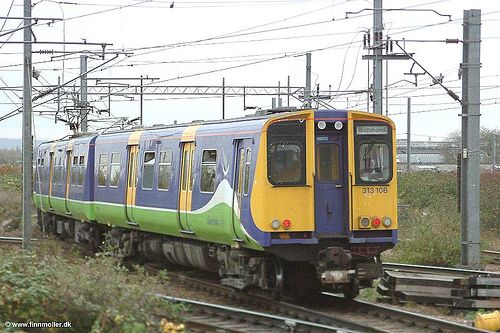
There can't be many worse places to 'pen' a blog entry from than a crowded carriage on a Silverlink train service, sitting next to a Lock-Knee sufferer, but frankly I don't really have a lot else to do other than look at the scenery that wasn't all that inspiring the first of the thousand time I saw it. Apologies for the spelling!

I had to leave home before I got to see any of the firestorm that Quentin Davies, MP for Grantham and Stamford, crossing the floor from the Conservatives to NuLab will have ignited on most of the blogs I read.

As it happens I don't really care all that much. One less Davies/Davis in the ranks of Conservative MPs should make life a bit less confusing and the loss of a Quentin can only be a good thing for their modernisation.

I don't think much of his rationale for the move will really strike that much a chord with the people of Grantham, or the nation as a whole. He appears dissatisfied with Cameron's EU policy, by which I presume he means the call for a referendum on the 'Amending Treaty'; if so he, if polls are to believed, is setting himself at odds with well over 80% of the population. I always hoped that Cameron would allow individual Conservatives to stand on a pro-Treaty platform, but had also hoped that most Tory MPs, in some ways especially the more visionary side of the pro-EU element, would see the need to take this issue to the people to lance the festering boil of the UK's attitude to Europe.

I suppose there is an outside chance that he is driven by seeing 'representative' democracy as some kind of Shibboleth to be worshipped despite the damage it will almost certainly inflict on his own cause in the long term, so I guess you could have this one down as a bizarre point of principle. This cannot be said of one of his other justifications, that the Conservatives are now too media and PR obsessed, an assertion that can only make him look ridiculous. For Christ's sake man, you are joining NuLab who have surpassed even themselves in these arts over the last couple of weeks. Now the Lib Dems, the argument might have held water in their case as they seem to have lost the plot entirely in these regards, but NuLab? Nah.

As it happens I do have some sympathy for Mr Davies' position against an immediate inquiry into the conduct of the Iraq war, but even that's evaporated having seen the childish ad hominem nature of his attacks on Cameron in the late edition I've just picked up. They are not the words of someone suffering a late life crisis of conscience, but of an embittered man being bettered by a younger generation and seeking a more old-style paternalistic, authoritarian home. Quite what his new friends will make of his attitude to gay rights, ID cards, anti-terrorism laws and the hunting ban, I really wouldn't like to guess, as Mr Davies conscience, as evidenced by his voting record, appears to lead him in very different directions to themselves.

I know all the arguments against an MP resigning upon changing party but, like most people I suspect, I don't buy them, regardless of the nature of the political metamorphosis. Some people vote for the man, I'm pretty sure many, many more vote for the party. It's the old representative democracy thing again. It's a fine concept, but one that people will only have faith in as long as they have trust in the promised basic tenets which will underpin the way the member performs his duty as representative. Sorry Mr Davies, for most people that comes down to party and manifesto.

I'm actually glad leading Conservatives didn't engage in this particular debate as it would have seemed weak and churlish, but at some less heated moment we need to consider a new convention to govern such situations if faith in the political system is to be maintained.

I won't be as unkind as doubtless others will have been this evening, though I do hope Mr Davies does prove the adage of political careers always ending in failure, and that anyone considering him for cosy jobs on some board or quango has some thought for the merits of honesty and loyalty. He may consider himself to be acting out of principle, but he is deceiving even himself if so, he' s just another self-serving piece of shit.

I don't even feel that sorry for the Conservative party, they are well off without him, the only sympathy I can feel is for those will have inevitably worked so hard at a local level with the man, believing that they were striving for the victory of a man of integrity; one they could trust. The feeling of betrayal must be overwhelming.

Monday, May 14, 2007

The Freedom of Information (About everyone but us) Bill Returns

David MacLean MP's objectionable private members' Freedom of Information (Amendment) bill returns to centre stage on Friday for it's delayed report stage. The ease with which time seems to find time in parliament's timetable can only be interpreted as de facto government support, and sadly the limited utterances from the opposition front bench suggests that they aren't exactly set against it. The argument that it's a matter for the house to decide is irrelevant the tone from the front benches is easily picked up by the public at large.

For those who haven't encountered this gem of a bill it's supposed purpose is to prevent Freedom of Information (FOI) Act requests forcing the disclosure of privileged communications between a Member of Parliament and his/her constituents or communications with third parties on the behalf of the constituent. It's mechanism for achieving this perfectly reasonable goal is to, uniquely among public bodies, remove both houses of Parliament from the scope of the Freedom of Information Act.

As it happens, should the bill pass into law, nothing whatsoever will change. House authorities, including the speaker himself, have committed themselves to continue to publish information in areas such as travel expenses that have already been subject to FOI requests. On the other side it is abundantly clear that the existing provisions of the Data Protection Act (DPA) already provides all the legal framework needed to protect the privacy of parliamentarian's communications. Even if there was a potential loophole in the protection offered by the DPA, something which I doubt, working in spheres often impacted by its provisions, it could be closed with amendments of narrower scope. It is not, for example, possible to use a FOI request to get hold of our medical records from the NHS. For this we will probably have to wait for the first security hole in the NHS computerised patient record which will, doubtlessly within weeks of the system's eventual launch, have all our medical secrets available to anyone with an Internet connection.

Despite the limited impact the amendments they nonetheless offend on several levels.

Firstly there's the contrast with the last time I recall MPs voting on matters that ultimately concerned the terms and conditions of their employment. We were told that they had 'no choice' about voting through a huge top up to their pensions pool because not to do so would have required amending the law which simply wasn't practical. I've got a suspicion that, should the parties hammer out a deal on state funding for their operations, then as with the FOI (Amendment) bill, time will be found in Westminster's busy calendar to get the legislation through.

There are also the questions raised by the fact that the DPA already performs the functions of the proposed amendments, if you accept the functions of the amendments are those publicly stated. I don't go in for conspiracy theories but it's easy to wonder if the FOI requests that worry Mr MacLean and his supporters are the ones that haven't been made yet. At a more trivial level I suppose the DPA would allow for statistical abstracts of communications to be made available under the FOI. Frankly I don't think it's a bad thing if this brought some honesty to the lazy rhetoric about their '...bulging mail bags...etc' during debates on a particular subject, with some bulging mail bags being shown to contain just a couple of letters. You could take this to the extreme of revealing the existence or non-existence of a single letter, however the Information Commissioner appears to have rubbished the idea that there is a usable loophole here.

Finally there is simply the image that bills like this present of Parliament. I think one of the most attractive features of the UK system of government is the relatively limited special privileges that our representatives award themselves. There are a few archaic boons associated with the status of the Palace of Westminster, a sensibly minimalistic concept of Parliamentary Privilege and a generally reasonable approach to remuneration and expenses, but I don't find, at the moment, anything that would offend a reasonable person greatly. We have seen, in limited numbers, our representatives as defendants in the courts of law, and seem able to contemplate prosecutions at the heart of government. The fact that this happens is a sign of a healthy attitude to such eventualities and our MPs don't rush through legislation to 'grant immunity in order to protect the dignity of....etc.' in the continental style is admirable. We've taken steps in the right direction in recent years, from televising of proceedings to the FOI act itself and it's sad to see regressive steps like the one proposed that separate Parliament from the rest of public life, or worse still doors for corruption like state party funding being opened.

As a Conservative voter by instinct I'm slightly disappointed to see Team Cameron at best having the inability to quietly have their former whip kick his bill into the long grass, or at worst giving tacit support to it. It is true that there are more positive signs, such as ideas on MP's pay, though here I would like to see an approach more akin to Amendment XXVII to the US constitution, to ensure that the matter isn't simply handed over to some tame quango simply to disclaim responsibility, and to ensure that the whatever is done that the remit does not stop at basic salary. Overall the effect, as with so many other areas of policy is to take the shine off what would otherwise be a very clear, consistent and appealing message.