


Showing posts with label BBC. Show all posts

Thursday, November 01, 2007

Idle Speculation

One of the bad things about being an insomniac is that occasionally your newsfeed reader beeps in the early hours and you roll over and read the article, intend to comment on it in the morning, but by the time you wake up and read the edited version the following day it has lost its potency.

There are those who know how Google caching works and how much confidence you can place upon it, but I am not amongst them so all I can offer is a straight cut and paste directly from the version of the BBC News Online story as it currently reads.

I'm sure that when I wake up tomorrow it will read somewhat differently, but I'll be commenting on the original. I can't comment on Powell to any great degree, he was before my time, but do I struggle to find anything in the 'immigration is not an issue of race' line that would have offended Hague, Howard or Thatcher. This is something that seems to have been a very sensible Tory mantra as far back as my active political memory extends. 'The Labour Party say he's black, we say he is British' was not a Cameron line, the party has being trying to deracialise these questions for a decade or more in the face of opposition from those parties who willingly play the race card for their own advancement, Labour and BNP alike.

It would be easy to have a go at the likes of Trevor Phillips, as close as he has been to the attitudes of the orthodox left in years gone by, but it is that background that makes what he says, for all his misunderstandings, so valuable.

Cameron hailed over immigration

The head of the new equality quango has heaped praise on David Cameron for his attempts to "deracialise" immigration.

Trevor Phillips, chair of the Equality and Human Rights Commission, heralded the Tory leader's speech as a turning point in the immigration debate.

He said Mr Cameron had set himself apart from Tories such as Enoch Powell, famed for his 1968 "Rivers of Blood" speech on immigration.

Mr Cameron said immigration levels to the UK should be "substantially lower".

In his speech on Monday, the Conservative leader said immigration had to be considered alongside other pressures including people living longer, and more people choosing to live alone.

Speaking openly
Mr Phillips said: "For the first time in my adult life I heard a party leader clearly attempting to deracialise the issue of immigration and to treat it like any other question of political and economic management."

"And given that Mr Cameron is speaking against a background in which his party's policy inheritance is defined by Howard, Hague, Thatcher and Powell, this seems to me like a turning point in our national debate about immigration."

He said this was "one that will make it possible for us to speak openly and sensibly about the subject, which most of the country sees as the single-most important in politics".

However, Mr Phillips, previously head of the Commission on Racial Equality, which has been superseded by the EHRC, told a conference in Birmingham: "But Mr Cameron has a little way to go on this matter himself.

"He is asking the 21st Century question about immigration. But unfortunately, he is giving the 20th Century answer in proposing that all of these issues can be solved by capping numbers.

"Rather, we need to meet head on the challenges of rapid and diverse population growth.

"We need to find ways to capitalise on the injection of energy that new migrants bring and bolster our infrastructure and public services to cope with the new demands."

Border police
In his speech, Mr Cameron argued that economic migration from outside the European Union, should be subject to annual limits.

And people from new EU countries should be subject to controls on access to the labour market - as the government has done for Romania and Bulgaria.

Other pledges he made were to set up a border police force with powers to track down and remove illegal migrants and to raise the minimum age for spouses coming to Britain to 21, and ensure they can speak English.

He later told the BBC that it was probably wrong to have linked immigration and asylum together in the past.

He said that part of the attempts to cut economic migrants from outside the EU would involve making it a priority to get people "off benefits and into work".

Source: BBC News Online

The key point is in one observation Phillips makes "For the first time in my adult life I heard a party leader clearly attempting to deracialise the issue of immigration". OK, he may have had convenient deafness for a decade or more, but at least he acknowledges now that at least one party is headed by someone, in the genuinely modern political sense of the phrase really is 'colour blind'.

From a personal perspective it actually feels strange to have commented on this controversial subject six or seven times in the last couple of weeks, since as far as I'm concerned it is a non-issue, other than the fact that a few stories have hit the headlines. It is not the topic in of itself that concerns me, just the hysteria that surrounds it. I've never lived in a world where well adjusted, intelligent people harbour racist instincts. I find it hard to imagine the time when such people did and I am glad that it is not the era I am part of.

Perhaps now all but those in the most appalling terminal stages of leftism can sit down and talk about what is, to any intelligent mind, an issue we need a genuine consensus on.

Sunday, October 14, 2007

Some Things Never Change

Australia
Fighting...but which cause?
As I wrote, as slowly and drunkenly as I write this this, my previous post, the news came in that John Howard had announced the date of the Australian General Election, November 24th, showing guts that our own Prime Minister so clearly lacks. OK he had to go soon anyway, but his demeanour was so different to the skulking Brown.

Sadly though, I was listening to News 24, who yet again trotted out the predictable line that it Howard's electorally precarious position was entirely due to Iraq and climate change. It might not fit with the opinion of any anti-Howard Australian I've ever met who generally just feel "it's time for a change" or any more methodical polling which tends to rate these issues as being pretty low down the priority list, but I suppose it fits better with the BBC agenda and I guess that's what counts.

How weird it would feel in these days of a spin, to hear a voice that reported the news as it is, rather than the news as those reporting it wished it was.

Sunday, October 07, 2007

Rational Environmentalism

Environmentalism
How to vote blue to go green?
As someone who is often critical of BBC national radio news and current affairs output, it is a rare pleasure to recommend something to listen to, still available on the 'Listen Again' service.

It has been a busy weekend, both politically and on the Rugby front, but I did pause in my preparations for England's game yesterday when I heard something on the radio that actually made sense, and made a note to listen to the programme in full today.

Yesterday's 'Talking Politics' on Radio 4 was the last of the current season as normal Westminster service resumes, and tackled the thorny questions around climate change, but not from the normal dogmatic BBC position. It does appear that on this subject at least, some semblance of impartiality has returned.

The 'Listen Again' archive for the show is here and it can also be downloaded as an MP3 podcast here.

The programme features an interview with “Sceptical Environmentalist” Bjorn Lomborg, in which he makes his case in a concise, powerful and highly convincing manner. For those who don't know Lomborg's line on how even if you accept man made climate change as fact, that currently approaches to dealing with it are backwards looking and come at an unacceptable human cost, I would suggest you take a listen. For those already au fait with the Lomborg manifesto there are a couple of nice digs at Al Gore to enjoy.

Focus group guru, Frank Luntz, has some fascinating insights in to green issues from a Conservative perspective. He looks at how David Cameron can take the popularity boost that his espousment of green politics has given himself and the party, and look to move from this to truly effective policy without relying on the current 'tax and punish' thinking that dominates the mindset of environmentalists of different political hues.

Finally the panel discussion features Fraser Nelson of The Spectator, Peter Hitchens, who, I'm sure purely by accident, makes the occasional constructive contribution, and they even manage to find a Green party spokesperson, Jenny Jones, who seems to be some distance from the flat-earth, anti-human wing of her party.

I'm not all that interested in green politics most of the time. As I've posted before, I have a deep distrust of some of the green lobby's policy of non-debate on the science of climate change. Another source of scepticism comes from my memories of being told in high school that we had to conserve fossil fuels as they would run out in the first decade of the 20th century. Except of course, they haven't, and we have found massive new reserves and technologies to exploit them. I can't help feeling that the emergence of a new problem, requiring exactly the same solutions once the old argument lost its potency was just a little too convenient.

I buy more into the arguments about security of energy supply, but I guess this is a harder line to push. If you ask the man in the street if he's worried that his gas bill is kept down only by buying from a sometimes hostile Russia, he'll shrug his shoulders and say 'so what?'; ditto petrol from the Middle East. A nice little story line about the end of life on Earth as we know it is a much easier message to infiltrate into the public's consciousness.

Like some of the comment in the programme, I did like the subtle shift of Tory green policy, putting it under the general 'security' banner.

For all my general scepticism, I did enjoy this show. Many of the points put forward would apply equally to tackling security of energy supply, and the moral case that we should tackle other global problems of higher priority first was very powerful.

For once, well done the BBC.

Sunday, September 30, 2007

Return to Action

Ed Balls
Bit of a Balls up?
This has been a good weekend. True, my own life continues its inevitable course down the toilet bowl, but a combination of a birthday party for someone whose popularity is not based on spin, but on the fact that she is just naturally one of the world's 'good guys', coupled with the markers set down by some so-called minnows in the Rugby World Cup has more than compensated (more to follow).

I even thought that the weekend had got off to a good start when the BBC posted its pre-Conservative Conference piece on line, just as I went to celebrate with my new Fijian friends on Saturday.

Naturally it has been updated now but this is what I cut and pasted directly from Auntie before 40 hours of alcohol induced oblivion:
The Tories will propose an Airline Pollution Duty, designed to encourage airlines to fly with full planes and penalise them for flights with only a few passengers on board.

The government has dismissed the policies, saying Mr Cameron has to explain how the ideas are going to be paid for.

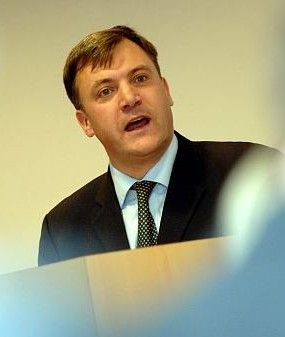
"It's not proper opposition politics, let alone government politics, to come along with billion-pound announcements which you can't show where the money's going to come from," said Schools and Families Secretary Ed Balls.

"The question, I think, in families' minds is 'will we be hit on our mortgage rates or on our taxes to pay for these kind of proposals'."
Source: BBC News
This was the only Conservative proposal raised in the article at the time I first read it, and, to be fair, I suspect that Balls was actually talking about something else, as clearly the idea that he would imagine that a new tax should somehow require yet more taxpayer money to fund it would be ridiculous (yes...even as I write it I'm wondering about that sentence), even for a sufferer of leftism.

Two issues do come to mind though. Firstly, why, on Saturday afternoon, was so much prominence (at the time pretty much half the article) being given to hostile government reaction to proposals that, good or bad, had not been formally made. Of course there are briefings on and off the record, but to allow ministerial critique to be made of what was effectively non-policy at the time had a bad smell about it.

Secondly, I wonder if we might see some action with Auntie for once, as for at least about 4 hours someone made a government minister, even incorrectly (in a journalistic sense at least), seem like a half-wit.

Perhaps for once a stern ticking off will be given, and it will be explained that slavish devotion to the cause and loyalty to the supreme leader is a necessary, but not in of itself sufficient basis for advancement within the national news team.

Wednesday, August 22, 2007

Restoring the Balance

The Jackal
Day of the Jackal
Having been a bit critical of the BBC recently, it's only fair to mention I did get a bit of pleasure out of the corporation last night even if it has caused me not to be feeling especially sharp this morning. I was already pretty tired when I got home last night, but flicking on the box I saw the opening of the original Day of the Jackal film adaptation on the BBC. I'm afraid it's one of those films I just can't switch off.

I'm not a particular fan of classic films, but this is one of those where the only ways in which it has dated actually add a little extra to the film. The locations, general style of the the time, and even the cars inspire a kind of nostalgia for a time that was largely before my birth and certainly beyond my memories. The political situation that underpinned the plot has also drifted out of public consciousness, but in this it acts at least as a reminder, if not necessarily a history lesson. The shadowy OAS (Organisation de l'Armée Secrète) did indeed exist and plotted over 30 serious attempts to assassinate General De Gaulle, before French intelligence proved its case against a number of its leaders, who were executed.

There was a great multinational cast and production team, which certainly adds to the films atmosphere, especially in the style of the cinematography, which was very much in the French style. The plot shows British and French police and secret services operating in very different ways, but in both cases very effectively and co-operating fully to a common purpose.

It's odd that the original author is now so commonly vilified as a swivel eyed little-Englander xenophobe by supporters of the EU, for his simple crime of not believing that the EU provides the only model for cooperation in Europe. But of course Fredrick Forsyth is not a little Englander or xenophobe, no more than the late Sir James Goldsmith was; the terms are just a mindless smears from those on the other side of a debate whose reluctance to engage properly in that debate is the real scandal. It's a tactic we have see again in the last few days in the increasingly desperate attempts of the left to attach the label of racist to Boris Johnson, seeing it as Ken's best chance of a third term. Fortunately their attempts seem to be backfiring somewhat, as the puerile Compass group report seems to be being treated with the contempt it deserves.

Another interesting link to more current affairs appeared when I was looking a web page on the film, who linked to an old article on the BBC website, where Mr Forsyth suggested a simple, low-cost approach to making the type of identity theft featured in his novel very much more difficult. Very presciently though Mr Forsyth observes in the article:
"Of course, bureaucrats would think of some expensive way of solving the problem."

Source: BBC News

He was of course, we now know, entirely correct, though I'm not sure even he could have anticipated the full extent of the expense, or the liberty crushing nature of the ID Card and National Identity Register scheme.

As a final observation, writing this post has made me recall a time when daytime TV, which my work schedule sometime makes me end up watching, I seem to remember often featured some classic films in the morning slots, like the old Basil Rathbone Sherlock Holmes adaptations.

As I said up front, I'm not really a fan of many of these classic films, but that said they are head and shoulders above the diet of 'crap in the attic', 'crap at car boot sales', and 'watch me buy or redecorate my house' shows we face these days. I suspect there's some mindless 'original content' target in play somewhere down the line; if so it is not money well spent. Licence fee payers money shouldn't go on this kind of rubbish that is available in any quantity on commercial channels.

If that means filling up the gaps in the schedule with material from the archives - so be it; it is, in effect, tax payers money, and as such should only be spent as and when it is really necessary to fund the type of programming that the market would not otherwise offer.

Hmm, I wonder if there's a prize for tying the most disparate topics to a single apparently unrelated headline post.

Tuesday, August 21, 2007

Off the Reservation?

Cameron and Redwood
Same crime, same MO, same culprit?
I've been having a bit of a groundhog day sensation over the last couple of days, so I feel compelled to post about something I wasn't going to bother commenting on as others had done so much more effectively. It's just that an interesting pattern does seem to be emerging.

Last week we finally saw the publication of John Redwood's competitiveness commission report, in all its 160 plus glorious pages. It was probably been a frustrating day for many Labour MPs who would normally be queuing up to condemn it, but were beaten to the gun by several of their own ministers and colleagues who chose to condemn its contents a couple of days beforehand, even before they were even known.

The most tawdry performance though was, as is so often the case these days, not by the Labour party itself, but by the BBC. Just a matter of days after the organisation disgraced itself over the early reports of the expected contents of the report, as highlighted by Iain Dale, with sufficient impact that Helen Boaden, the BBC's Director of News was forced to address the subject on the BBC's Editors' Blog, they repeated the offence on the day of the actual publication of the report.

Iain Dale's commments concerned mainly 5 live, but the same thing seemed prevelant on Radio 5. Listening to Radio 4, a venerable channel that, rightly or wrongly, most see as being the station of record when it comes to current affairs, on the day of the reports publication I was astounded to hear the same blatant disregard for impartiality once again as the 9AM news slot covered the item (OK yes, it had been a belter of a night so I slept through all the relevant parts of the increasingly anodyne Today programme). The figures hear are an approximation from a bleary eye staring at the clock radio, but won't be that far off:

  • 0-20 seconds: Presenter states that the report has been published, with a brief synopsis of its comments, concentrating on the more controversial proposals (which is fine by me!)

  • 20-40 seconds: Presenter states that reaction from the government has been very negative (surprise, surprise, but fair enough)
  • 40-god knows how many seconds: Long diatribe by government minister against the proposals, well over a minute (nothing from Mr Redwood, not even the most basic attempt at balance)

I was on the phone during the 10AM slot but I could just about hear it, and it seemed pretty much the same fare.

And then I had to go to work…and when I returned all had changed. The couple of hourly news slots I caught had nothing but the fact that the report was out, the synopsis of its contents, and at least one extended comment from Mr Redwood himself.

I wasn't going to comment on it on this blog, as so many others have done so already and more effectively, but then this week has seen pretty much a repeat of the same behaviour in the coverage of David Cameron's offensive on hospital closures. Once again the Today programme would be hard to lodge an effective complaint against as only the tone of the reporting betrayed the well known political sympathy of the programme's presenters, while a paper transcript would at least show a fair attempt at balance. The news bulletins which followed though were once again manifestly biased towards the government's refutation of the claims made by the Conservative team, mentioning them only as preamble and context to the minister's bile. Yet again, by lunchtime the item had been replaced by a more balanced offering, though only once it had ceased to be the lead item.

For what it's worth I do genuinely believe the BBC News editorial team are sincere in their desire to be impartial. I do doubt though that they fully appreciate the scale of the internal cultural problems they will have to surmount to achieve impartiality. Nor do I believe that the fulcrum around which they seek to achieve balance lies at a point that would be consistent with the weighted average of views of people in this country.

The lack of the impartiality of some of the coverage of some of the morning radio news coverage has surprised me, even from my slightly cynical standpoint, especially considering the renewed spotlight on these matters at the BBC, and the early signs that the organisation is at least recognising that it has a problem.

So stark has been the contrast with some of the later bulletins, which in some cases could have been accused of lack of balance in the opposite direction, that it leads me, from my position of complete ignorance on the matter, to speculate on the management structures that may be in play. I assume that while the heads of the editorial function are on call 24/7 that they must delegate a great deal of authority at certain times to duty editoral staff. I would probably expect that hinterland between drive-time and lunchtime not to be one of more heavily supervised time spots, compared to the key early morning, lunchtime and evening coverage, and would expect day to day operations to be delegated to someone lower down the food chain.

All of this leads me to wonder if there is just a bad apple there somewhere in the radio 4 set up, someone who has gone completely off the reservation. If so it's essential that they are dealt with firmly and decisively as they are clearly harmful to the corporation's image. I have had juniors working for me who've headed down the same route, and to be honest it's the devil's own job to ever trust them fully again, even in the unlikely event that you can shake them from their belief in their own righteousness.

I wish no real malice on anyone, but I would have to say that with the issue of BBC impartiality in the spotlight, and numerous seminars and training courses supposedly having been undertaken to address perceived shortcomings in this area I think there's little much more that could be done with such a rogue element. I would have to say that in my opinion that the very need for the training and seminars should in of itself have constituted fair warning, leaving summary dismissal as the only viable option.

It's a shame really. I have little opinion on healthcare never having needed more than a quick visit to A&E post-rugby in the last twenty years, but I found the Redwood commissions proposals interesting. Largely to my taste, and certainly controversial, but the debate has to happen sometime because right now we are heading down blind alleys on so many fronts as a nation. Unfortunately I've got a sneaking suspicion that the chances of individual components being implemented is pretty much inversely proportional to their probable benefit to the country, due to their political risks.

The attack on the health on safety culture is a case in point. In the world of business it is a pendulum that has swung to far, and it has wrought a terrible price in so many other walks of life, as the almost pathological aversion to risk by pointless non-job officials blights more and more of the harmless attempts by well meaning people attempting to add something to society.

The problem is that even to suggest it sounds like a call for the return of 19th century factory conditions, and offers an easy target for facile knee-jerk comments from even the most half-witted of NuLab MPs.

Saturday, June 30, 2007

An Undeserved Notoriety?

Glasgow Airport
Glasgow Airport - Another terrorist incident?
We're now into our fourth hour of coverage of the incident today at Glasgow Airport.

It has been almost continuous coverage, no breaks for a brief round up of other news let alone sport or weather. Without a doubt it deserves to be the lead story and a certain prominence on any self-respecting 24 hour news outlet, but this much?

Frankly, the whole story can be told in every bit of detail that is known, every pertinent eyewitness statement listened to, and every bit of expert and not-so-expert analysis analysed in less than ten minutes, so all we are getting is the usual almost unchanging loop. I don't seek to minimise what could have been a much more serious incident, but I still think it is overkill.

I should say that it is not yet known whether this incident represents a rather unsuccessful terrorist attack, or something else, but for the sake of argument let us assume it is. I suspect that it is a sad reality that we will have to face incidents like this on a fairly regular basis for many years to come. There's actually very little we can do about it. As a country, we could exit Iraq tomorrow and adopt a rabidly anti-Israeli stance on the world stage and, let's be honest, it would make very little difference. At heart, for the fundamentalists, it is not what we do, but what we are, and the liberal values we espouse. They fear the attraction of the these values over their primitive values of centuries ago; they are right to fear our values, because basically they are right and respect the best of humanity's natural instincts, rather than the baser superstitions and hatreds that they appeal to.

It's natural that at the moment we tend to over play incident's such as today's with the genuine horrors of the London tube bombings still a relatively recent memory, but I really don't think we can afford to give them such prominence in the future. I'm no expert on terrorism, but I suspect that there are just as few evil geniuses in these organisations, capable of creating slaughter on a mass scale, as there are geniuses in any other organisation capable of coming up with a great eureka moment to the benefit of society. While I reluctantly expect we will see more such incidents, I suspect the vast majority will be similar to today's shambolic affair thankfully. Yes, the incident today could have been a lot worse, but given the mechanisms they opted for, the chances of it having being so were probably pretty limited. I remember listening to some stunt director once explaining just how hard it is to make a car explode in that spectacular Hollywood way.

News reporting needs to be full, frank and detailed, but also needs to avoid giving undue prominence to these groups. Frankly, all I want to hear about it now, much of the basic detail being known, is in the days to come whether the alleged perpetrators had links to any known groups or whether this was an ad hoc set of loners, and in the distant future, whether a jury finds them guilty and of what charges. Should they disappear behind bars to spend the rest of their miserable lives in highly sub-standard state accommodation then that is the last I will think of them.

It's especially the "panic and fear" phrase being used by the current BBC anchor that is starting to grate. It seems to fly in the face of all but one of their own eyewitness accounts and plays into the hands of those who try to sell us on deeply objectionable concepts such as ID cards and lengthy detention without charge.

Just before posting my favourite blog read at the moment, Devil's Kitchen has commented on some web coverage of the incident. At first reading I thought it represented a view very different from my own, but actually on second reading I think I agree with him, as well. We should take all incidents seriously and responsibly, because as the Devil himself says:
"Now, it is all very well for The Register to talk about Beavis and Butthead bombings, but just because these arseholes haven't been able to make a competent bomb does not mean that they neither desired to nor could not actually do so with a bit more thought."

Devil's Kitchen

He's right, but I guess all I'm suggesting is that there is a balance to be struck between over trivialising incidents like this one, and aiding terrorists in their aims by creating an excessive climate of fear through media coverage. As for his own criticisms on the way these incidents are reported as well his more practical suggestions on dealing with the menace, and all I can say is hear hear.

I should say that in all of this I'm not suggesting there is any real intent on the part of the BBC or Sky, who've been going down pretty much the same line. Stories like this will always have their macabre fascination for a large portion of their audiences, and I suppose for the journalists involved, it's the type of story they always imagined themselves covering one day as they set out on their careers. There is however need for some care in what they do because by it's nature terrorism is a publicity hungry beast. If we are not careful we will see a journalistic analogye of science's observer effect (sometimes wrongly assumed to be the same as the Heisenberg uncertainty principle) emerge, where the act of observation effects the outcome of the experiment, and to an extent we always have, where the newsworthy becomes the preferred target, rather than necessarily the symbolic or even the greatest carnage.

Oh, and a final pre-beer comment. Jacqui Smith, the new Home Secretary, seemed terribly uncomfortable and lightweight compared to her predecessors. Jack Straw aside, I've hated all NuLab's occupants of this role more then those in any other front line job, Broon notwithstanding. That said, if you are going to have an authoritarian control freak with no regard to our traditional liberties to do the job, you may as well have one that sounds the part.

Update 8:35PM: I've just realised it was rather remiss of me to mention the Devil without thanking him for organising the enjoyable Libertarian UK drinks on Thursday evening. As the Devil himself pointed out, trying to get people of a Libertarian outlook together is a bit like herding cats, but he did manage to get a lot of people in the same room, and was a pretty effective catherd, even of some of the more feral beasts.

Thursday, May 24, 2007

The Truth Will Out...

...if only when it gets leaked. The claim that the proposed amendments to the Freedom of Information (FOI) act, removing both Houses of Parliament from its scope, are purely to protect communications between our esteemed parliamentarians and humble constituents lie in tatters tonight. At the same time the the reason that there has been such strong support from the government front bench, despite their officially neutral position has become crystal clear.

According to a leaked letter from Trade Secretary, Alastair Darling, to the Lord Chancellor, the BBC tells us that:
'The Trade Secretary is concerned that it [the Freedom of Information Act] does not sufficiently protect advice from officials to ministers.'

Naturally he does not go on to explain the dangers such releases, even they passed the public interest test, could pose. He does not discuss the prospect of his colleagues spending some of the retirement in substandard government provided accommodation with addresses beginning 'HMP' rather whatever grace and favour prestige homes they can cling on to. Instead he opines that the fact that the is, in his mind...
"a discernible trend within the Information Tribunal that decisions on the public interest test have not been falling in the government's favour in key cases"

...that this is...
"placing good government at risk"

...because...
"If we are to live under constant threat of publication, this will prevent MPs from expressing their views frankly when writing to a minister. We need urgent advice on what the position is."

So this is what it is all about, it is not about protecting communications from the man in the street coming into the public domain. It is about preventing the man in the street knowing what the people we pay to represent us are saying to each other.

It's not the battered wives or public spirited informants whose identities and information need protecting, what needs hiding away is the type of thing the BBC highlights:
In March, Treasury documents were released under the Freedom of Information Act which showed officials warned of the effects of abolishing dividend tax credits, saying it "would make a big hole in pensions scheme finances".

Anyway, frankly, if this is the kind 'good government' that the FOI act threatens, I'm more than happy to give the alternative a go.

Friday, May 18, 2007

BBC Monkeys

BBC"This is what we do"
In the Village, though less in number then the French, past and current employees of the BBC and other broadcasters form another significant group around town. There are couple of them that I know well, both top blokes.

One of them had had a look at this attempt at a blog and last night in the Mother Ship, took me to task over a slight swipe I had made at the licence fee. The main line that he took was that without the licence fee that its news and current affairs coverage would end up dropping to tabloid standards.

He was not convinced by my arguments that there was perfectly good quality TV news produced without this tax, so I was forced to explain why, even disregarding any questions regarding bias, I wasn't convinced that the BBC entirely above the tabloid mindset itself. I was able to argue from personal experience.

A few years ago I was doing some work for MacMillan, publishers of the world's most prestigious scientific journal Nature, sitting not far from a senior editor. He stood up and asked if we could keep the noise levels down as he was about to do a telephone interview with someone on Radio 4's PM programme about some recent breakthrough in HIV research. They were quite often asked to do opinion pieces so I was pretty used to listening to half a radio interview and guessing what the questions were for the answers I could hear.

This one was no exception, and the most of it was taken up by a layman's overview of the nature and importance of the discovery. Towards the end the interviewer must have asked the obvious question about how long it would be before a usable treatment would be found. The following is what I think a pretty accurate version of what followed from the one side I could hear:
"Well it could be some time, for a start the work to date has all been done on SIV not HIV which means..."
...
"SIV, that's to say Simian Immunodeficiency Virus, as opposed to the human form HIV"
...
"Yes, Monkeys"
...
"Well its still useful information because the two viruses are very similar, in fact we are sure that HIV is a descendant of SIV, that at some point it passed from the monkey population to the human population."

At this point there was a longer pause than usual as the interviewer obviously was asking another question. I can only speculate on what the question was and who was asking it, all I know is that the interviewee's face clouded over and made an impression of bashing his head on his desk. Eventually he spoke again, more firmly, and slowly than before:
"No there are other ways it may have been transmitted. They may have eaten the monkey, or been bitten by the monkey, there is no evidence at all for what you suggest."

If only if this had fallen in the days of the 'listen again' service, I would love an mp3 file with both sides of the conversation, if only to identify which overpayed interviewer had the puerile mind.

Monday, May 14, 2007

Liberal Democrat MP Demands Radical Change or Withdrawal from Europe

According to Radio 4's PM programme this evening, Richard Younger-Ross, Liberal Democrat MP for Teignbridge, has strongly criticised the politicised nature of European voting systems which allow organised regional blocs to force their choices on Europe as a whole. According to the BBC he has called for the United Kingdom to demand radical change and, if this is not forthcoming, to withdraw entirely.

Unfortunately it transpires that this does not represent a damascene conversion on matters European for the Liberal Democrats, nor even a brief return to Planet Earth for Mr Younger-Ross, as the only democratic deficit which seems to concern him is that involved with the Eurovision Song Contest. He would do better to apply himself with the same vigour to the flawed or absent democratic processes by which decisions are made in the European Union that actually matter to this country. Perhaps then the LibDems might take one small step along a path back to a relevance they have lacked for more than a century. Maybe the inexcusably politicised malapportionment of seats in the European Parliament (with or without the provisions of the Constitutional Treaty in place) might be a place to start, even if he doesn't have the guts to go for the big issues like the illegitimacy of the Commission.

I wouldn't hold my breath though, I strongly suspect at heart he is at one with many fellow LibDem's, like the appalling Graham Watson MEP, in their intolerant views on the EU, their crusade to stifle any serious debate about the UK's place in Europe and explicit wish to kill off any chance for the people to make their own choices in the matter.